Not Kicking in Your Triathlon = Bad News

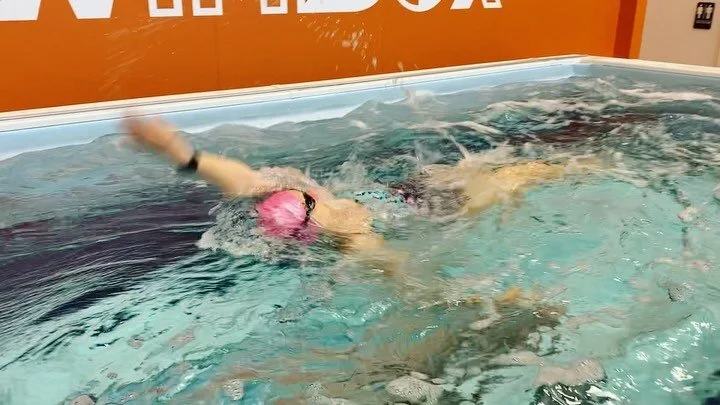
When it comes to the triathletes I know they're always telling me how they need to "conserve their legs" to be able to perform on the bike and the run. So what does this mean to them? It means they kick little to not at all during their swim. Before you try to tell me I’m wrong, I know that at least 75% of you have all thought to yourselves, “if I don’t kick during my swim, I’ll save that much more energy to use for the rest of my race.”

And you know what? I can’t blame you. On paper, that makes complete sense. But in actuality? That’s a terrible idea, and you’ll only be hurting yourself and hindering your race performance if you do so. Having a consistent kick during the swim portion of your triathlon is key to keeping proper body positioning, maintaining rotation, and preventing unnecessary drag from your legs sinking and being pulled behind you.

SwimBox Swim Lessons Virginia Swim Team Swimming

Think of it this way, have you ever tried to run while keeping your arms motionless and straight at your sides? If you have, please tell me there’s video, because I would pay good money to see that. But seriously, imagine running without the aid of your arms. Not pretty, and it definitely isn’t efficient. Which if you think about it is what we're always aiming to be in these long races, efficient. The same goes for your kick in swimming. Your kick is needed to round out your stroke and keep the rest of your body/arms in line with what they need to be doing.

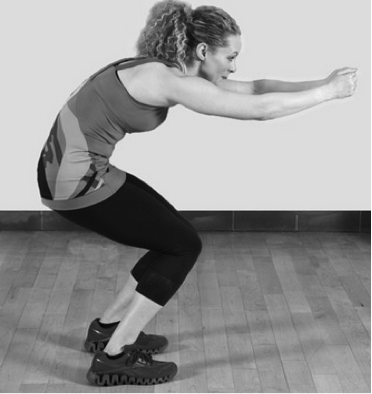
Don’t get me wrong, you don’t want to go all out and be crazy with your kick either. There’s a sweet spot we’re looking for here. How do you find that sweet spot, you ask? Well, that’s what practice is for! You need to find a pace that you can maintain for the length of your swim, preferably longer, that isn’t detrimental to your energy stores and promotes a balanced and efficient swim. A small kick that stays up at the surface of the water, is driven from your hips, and doesn’t create too much of a splash is what you’re looking for. The best way to figure out this movement? Start by practicing out of the water to get the feel for a good pace and help your body become more aware of the movement goal.

SwimBox Swim Lessons Fairfax Swim Lessons Vienna Swim Team Swimming

The pace is going to be different for everyone, so don’t go asking your friends how they kick during the swim portion of their triathlons and try to copy them (because if you do 3rd grade is going to call you asking for it's tactic back). Chances are high it’s not going to be right for you.

Put in the time to find that sweet spot. Don’t exit out of this window and keep on not kicking during your swims. If you do, the time and effort you’re putting in to work on technique and all the other aspects of your swim will have been a waste, and your race times will show it.

Worried because you don't know if you have a proper kick or not? Check out our video Kicking on Land to start from scratch and focus on learning each step properly before you even step foot back in the water.
Jarrett Brumett Guest Series Post #1: How Strength Training Can Help Bulletproof You

Necks, shoulders, hips and low backs. The areas that bark out to let you know that you did 4,500 yards yesterday. How can adding more exercise possibly help them to feel better? Well, by addressing the negative affects that a lot of swimming can have on the body:

  • Poor Breathing Mechanics and Core Stabilization
  • Poor Joint Dissociation and Body Awareness
  • Compensatory Shoulder Mechanics
  • Excessive Fatigue

I’ve seen these 4 variables time and time again plague elite-level swimmers. It’s why I actually put a priority in addressing them in my programming. Here’s how I do it:

Breathing Mechanics

All of my athletes start off with breathing exercises, whether they’re swimmers or not. It’s mandatory and pays HUGE dividends in how the core functions and it helps to modulate their nervous system into a better state to take load.

Swimmers get an emphasis on breathing work for a few extra reasons:

  • It helps to teach them how to create stiffness through their spine.
  • It helps to turn off the accessory breathing muscles and keep them from affecting shoulder mechanics
  • It can be used to improve thoracic and rib mechanics and address mobility restraints.
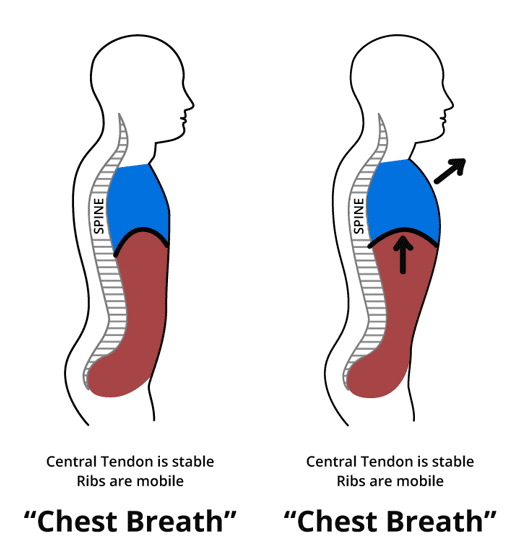
Dysfunctional Breathing courtesy of In Pursuit of Yoga

Dysfunctional Breathing courtesy of In Pursuit of Yoga

Functional Breathing courtesy of breathing.com

Functional Breathing courtesy of breathing.com

In fact, breathing work is so important for swimming that Dominic and I even made a course on it last year and it’s been spread throughout the world. We’ve had many swimmers reach out to us and note how simple of an intervention it was, yet how much time it shaved off.

Below is a video of one of my favorite drills for teaching diaphragmatic breathing to swimmers.

Once they can own a full breath, I let them practice it for a minute or two to try to really coax more rib expansion and then I move them onto this next drill to teach them how to create core stiffness.

This is incredibly important to address as many swimmers are in the habit of pulling their belly button to their spine, which has been actually proven by EMG to turn off a lot of the core musculature. Teaching them how to engage their abdominal wall and be able to maintain its tension throughout a breath cycle will lead to dramatic changes in spinal mechanics and will significantly help with alleviating stress off the low back. It also brings us into our next point….

Body Awareness

In the early progressions of strength work with a swimmer, it will literally be like watching a fish out of water. I have found that many swimmers have a poor ability to dissociate their joints and create the proper tension to execute many traditional strength movements. I’ve always hypothesized that it’s because the water gives resistance to their movements when they swim and their body gets used to the feedback. Then, when they’re out of the water, the volume of that feedback is significantly reduced, and thus their body awareness decreases. Admittedly, there’s no research to support my theory, but I can site many other strength coaches who have run into similar issues with their aquatic athletes.

The braced breathing work helps to kick start the joint dissociation, but it needs to be expanded upon to have a major effect. The tension from the drill helps to give feedback on spinal positioning. When they can create stiffness and get that feedback, they can prevent it from moving and doing the work. I can’t understate how many times I’ve seen swimmers try to use their spine for exercises. Pushups, rows, hinge work, squats, you name it, and I've seen a spine try to do it. By creating a solid and strong base with the core tension, you can prevent this and slowly build up other movements and teach them how to more appropriately load their joints.

Now even though I just drove home how important tension is for movement feedback, there are other gaps to be filled. You also want to teach the athlete to be able to inhibit their over-recruitment strategies and simply move through specific segments. This is great for those athletes that create high-threshold strategies for simple movements (read: athletes that tense up all the time when they don’t need to). One of my favorites of these drills to drive dissociation home is primal rolling. It’s actually an exercise that was created by a famous PT, named Gray Cook, to help clean up spinal firing patterns and encourage healthy spinal mechanics, which is a added plus for me since I mainly use it to get an athlete able to focus on dissociating limbs from trunk. To perform them, you simply lay on the floor and lift one leg up in the air and use that leg to pull yourself over. Sounds easy, right? Well, try doing that while keeping THE ENTIRE REST OF YOUR BODY LIMP, ESPECIALLY THE OTHER LEG! Not as easy as it sounds. See below.

Again, keep the whole body limp except the active leg. It’s super common to see swimmers shift their hips and try to use their trunk muscles during this movement.

By progressing the appropriate joint loading strategies and increasing the internal feedback, you are essentially making an athlete that will be easier to coach and correct, as well as one that is more body aware and able to detect changes in positioning. This is why it’s so common to have swimmers a month or two into training with me start to talk about how they can actually feel their lats now when they swim. They have better awareness, which gives them better access to the muscle, and then in turn can give them better feedback on accomplishing the movement correctly. Which again, brings us to our next point:

Shoulder Mechanics

If the Greek legend Achilles had been a swimmer, the story would have told of his weakness being his trap, not his heel. Swimmers are notorious for being trap-dominant and having poor shoulder mechanics. It is by far the number 1 complaint I get from my newer athletes.

The problem is that swimming under fatigue can really coax the shoulder into some bad positions, especially in freestyle. The athlete will often ditch using their upper back on the pull and instead try to recruit with the pecs while doing so in what we call downward rotation of the scapula. Think of this as a form of desk-posture. And it’s a pretty bad position to try to emit force from.  

Good strength training should help to place more balance across the shoulder and help to cue the athlete out of these pathological movements. A well thought out program will have a high emphasis on strengthening the upper back and lats as well as promoting that healthy movement and awareness of the shoulder positioning. Below is my favorite drill to give swimmers in their warm up to help warm their shoulders up:

Notice how I cue them to first keep the core tension? The tension creates awareness and then allows them to disassociate their shoulders from their spine. It comes full circle.

Fatigue Management

Fatigue management is probably the most important aspect of injury prevention that no one talks about. It’s actually so important, that SwimBox now offers a special service for it. And yes, strength training can help. Or I should say, it can help to prepare the system to take on more stress when implemented at the right time of year.

If an athlete starts strength training at a time of year when their swim volume is low, it will allow them to build their system up and condition their joints and tissue to be able to take on more work. That is why it’s called Strength AND Conditioning. We are conditioning the body to be able to do more and better work. To be fair, if a swimmer is regularly doing an ignorant amount of yardage and their body can’t keep up, it won’t matter how much strength work has been done or how much recovery work is implemented, they’re cruising for a bruising.

The important thing to note here is that the harder and more intense strength work is done when swimming is on the lighter side. When the athlete is building large amounts of volume, that is when strength work should be manipulated to accommodate all the stress that is already on their system, not add to it.

The manipulation doesn’t have to just be in pulling back on the amount, it can actually be manipulated in such a manner that it stimulates recovery. If a swimmer is really building volume and they’re showing high signs of fatigue, a strength session can be written to facilitate recovery and give them a bit more juice to get them through their build problem-free.

How can you make a dry-land session so that it helps the athletes to recover? The answer may actually surprise you, but you will have to wait for my next post to find out!

Bahamas Training Trip Recap: Week 2

It's been a little over two weeks since Dominic and I got back from our Bahamas Training Trip and I'm missing the sunshine and our swimmers even more than ever. Last year, the first year we hosted this trip, we had one group of swimmers and were there for 7 nights. This year we had two groups and were there for 19 nights...quite the jump if you ask me. Going into it we were more than a bit nervous we would be completely drained after saying goodbye to our first group, but thankfully with a day to rest in between groups (and a little, okay a lot, of rum cake) we found ourselves amped up to welcome our new swimmers and get back into the water with them.

SwimBox Swim Lessons Arlington Fairfax Falls Church

Last year's group and this year's first groups were made up entirely of women, so it was nice to have two guys join us for the second week. This entire group was made up of newcomers and it was great to get to show them around the cove and the island for the first time. The first morning swim in the cove was absolutely beautiful, everyone loved it and couldn't get over how clear the water was and how many sea creatures they could see while they were swimming. 10 minutes after we finished that workout? Torrential downpour. No stop in sight. Thankfully it was Sunday, which means traditional Bahamian breakfast was called for: chicken saus and johnny cakes.

SwimBox Thoughts Swim Lessons SwimBox Fairfax SwimBox Arlington
SwimBox Training Swim Lessons SwimBox Swim Lessons

It might sound terrible, being on a gorgeous island for your swim training trip only to wake up to pouring rain your first morning. But is there anything better than a warm, comforting meal right after a long workout? Especially when that meal is hot soup, buttery grits, and thick cut johnny cakes with melted butter? I don't think so, and I'm definitely not one to see the silver lining, especially when it's raining. The first group of swimmers wasn't here on a Sunday, so unfortunately they didn't get to partake in this weekly tradition Bahamians have (restaurants only prepare this meal on Sunday mornings), but that just left more food for the second group! Chicken saus is essentially a rustic chicken soup with potatoes and juice from sour oranges mixed in with the stock. It's warm and the sour orange gives it a perfect tang mixed with the starchiness of the potatoes. Johnny cakes are cornmeal cakes that have a slight amount of sweetness, and grits are grits. If you don't know what grits are then you most likely didn't grow up in the south, which means I'll just describe them as savory oatmeal made from coursely ground corn kernels. There, that's my culinary lesson for the day. Back to swimming.

SwimBox Swim Lessons SwimBox Thoughts Swimming Blog

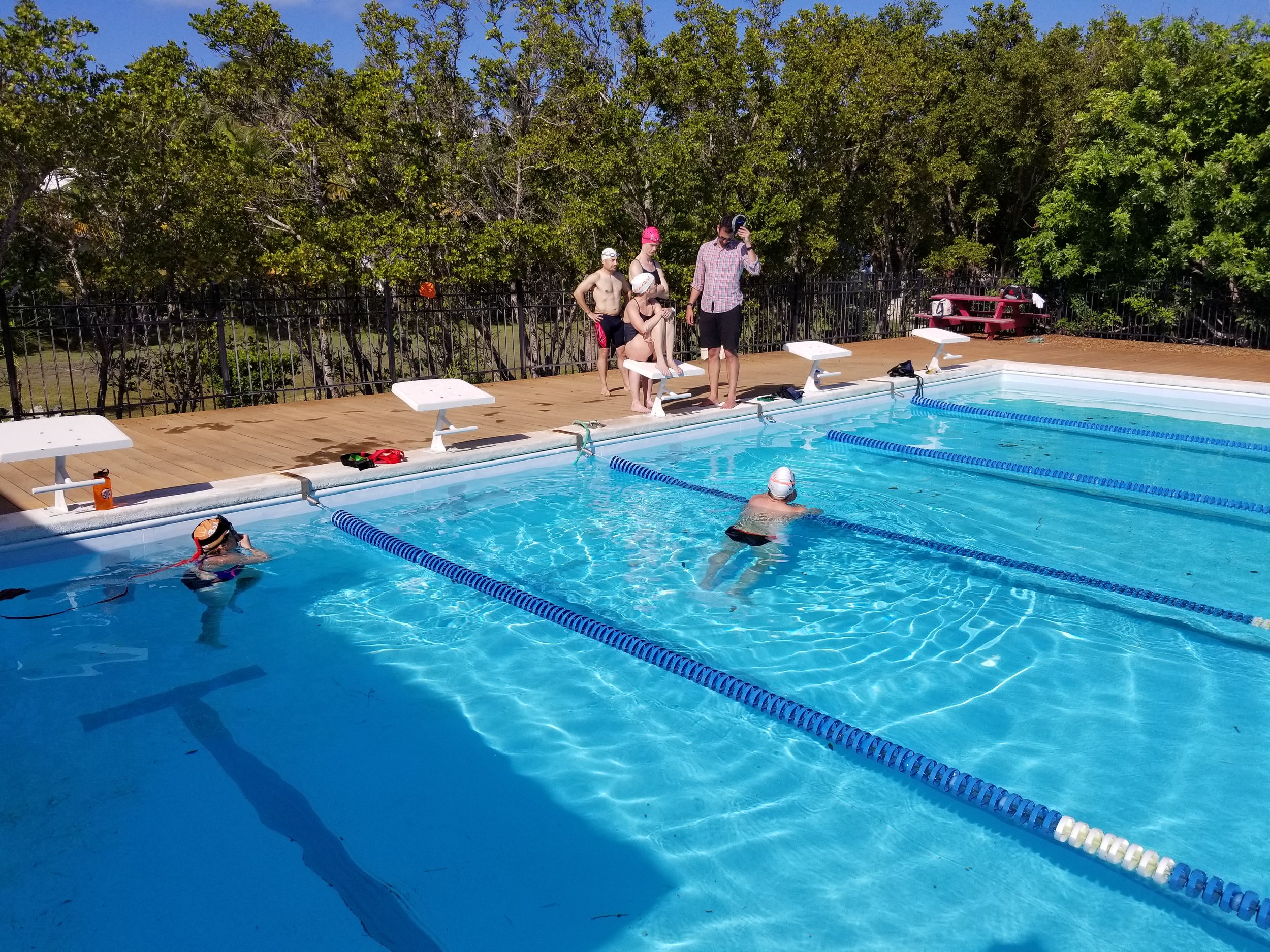
One of our favorite aspects of this trip is the fact that we get to see our clients out of our Endless Pool applying what they work on in their lessons in a different environment. Some drills can feel differently in a 25M pool, and it's a great opportunity to help our swimmers work through the differences and get the proper feeling we're looking for. One of our pool workouts focused on only technique work, we weren't there to get the yardage in that afternoon (don't worry, we did anyway). We set the pool up as a circuit and got in some of our favorite drills: paddlehead, parachute on the head with a theraband around the ankles (lots of focus for this one), paddles in hands, and parachute around the waist. 

SwimBox Swim Lessons SwimBox Thoughts SwimBox Blog Swimming Blog

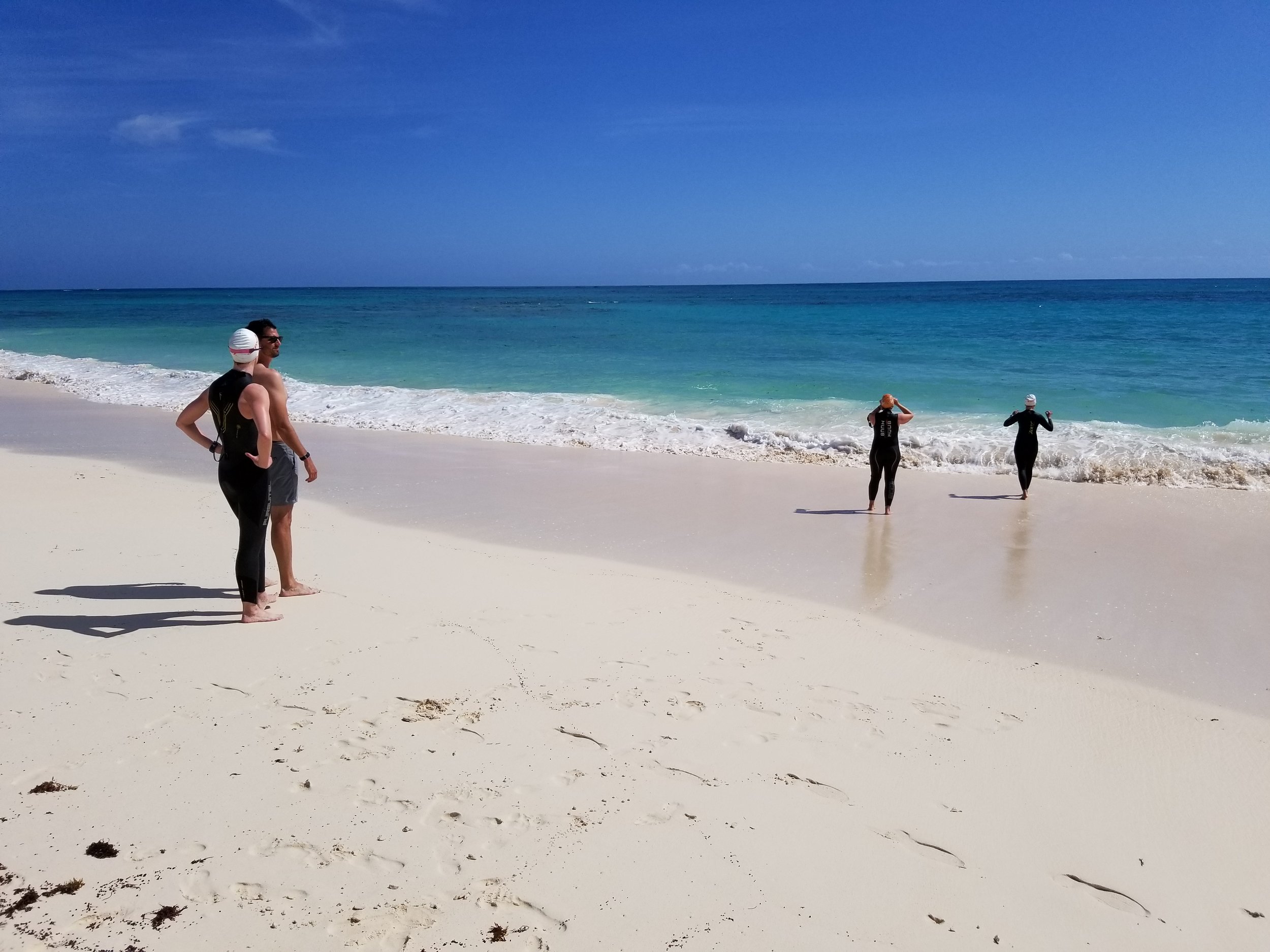
This group of swimmers reallyyyy wanted to take advantage of getting to swim in some waves, so we actually took two trips to the ocean (not the cove) to work on entry and exit of the water. A lot of the work you need to do to prepare for this aspect of open water swimming is mental, and in my opinion you just need to bite the bullet and go. That being said, I hadn't swam in the ocean - in this respect - for years. Last year I watched and took pictures from the beach while everyone got their ocean workout in, so saying I was scared was a bit of an understatement. But I didn't panic, I made sure I had calmed myself down before walking towards the waves, and I just got in. As simple as that. Once I was out there I realized I just had to work with the ocean, not against it, and as long as I stayed calm I would be okay. And I'm SO glad I did because I saw countless schools of fish, sting rays, and the largest parrot fish I'd ever seen. It was great.

SwimBox Swim Lessons Fairfax SwimBox Thoughts SwimBox Blog Swimming Blog

I could honestly write about this trip for hours and still not be done telling you about everything we did, but I think you get the gist of it all. Wake up, swim, breakfast, break, swim, dinner, sleep, get up and do it all again the next day. Not to mention many of these athletes went for runs in between the swims everyday, so they definitely put in a lot of work. Yardage count? 33,000 yards. Not too shabby you guys. And by that I mean you crushed it.

This trip is such an incredible experience and one I'm so glad I get to be a part of. Having our swimmers travel with us to this special place and get a chance to swim in the sun is one of my favorite parts of the year, I can't thank our clients enough for making this trip possible. Can we go back yet?

Jarrett Brumett Guest Series: Strength Training for Swimmers

We're so excited to have Jarrett Brumett, owner of JB Pain and Performance Solutions taking the time to write for us about the importance of strength training for swimmers. His intro to this series is below.

I want to start this post off by removing a few misconceptions regarding strength training and the sport of swimming (especially in regards to endurance events). To put it bluntly: smart strength training can improve a swimmer’s performance, help facilitate their recovery, and decrease their risk of injury. Let me repeat that, SMART strength training can improve a  swimmer’s performance, help facilitate their recovery, and decrease their risk of injury. This means that strength training, when performed and done right, can:

  • Increase force production (without adding mass if necessary)

  • Improve mobility

  • Improve body awareness

  • Give powers similar to that in Disney’s The Thirteenth Year

  • Decrease overuse injuries

  • Improve breathing mechanics and utilization of the breath

  • Make you an all-around more useful person

  • Improve the effectiveness of a taper

  • Make you look better naked


Now I say when done RIGHT because incorrect execution or negligently programming can:

  • Mess with mechanics and reinforce poor body awareness

  • Increase injury rates

  • Cause overtraining AND completely kill a taper

  • Make me want to put my head through a wall

  • Add unwanted mass

The perfect Drcox Scrubs Head Animated GIF for your conversation. Discover and Share the best GIFs on Tenor.

I use a repetitive and semi-arrogant tone with this because over the years I've found swimming to be a completely different beast when compared to other sports. The means of force production is much more methodical, the amount of volume can seem ungodly to those outside of aquatic circles, and the importance of a well executed taper is often unrivaled compared to other sports.

Let's also not forget that a competitive swimmer, even in their early teens, is often a highly specialized athlete and has a totally different physiology when compared to athletes of land-based sports. This means that much more care needs to be taken in regards to their programming and its implementation.

SwimBox Swim Lessons Fairfax Vienna Falls Church

With all of these factors hanging in the balance you can see why dryland training for swimmers can get pretty tricky, especially if you’re actually trying to address deficits and get the swimmers stronger and faster. It’s not as straightforward as, “just lift more weight,” or “just do more pushups.” There are some easy methods and ideologies that can be implemented that will get people faster, with less wasted effort.

So that brings me back to my point: smart strength training can improve a swimmer’s performance, help facilitate their recovery, and decrease their risk of injury. Over the next few weeks, I’m going to dive further into these subjects and give you things you can implement into your dryland training to help you to channel your inner-Phelps in the water. You will learn:

  • Do’s and don’ts of exercise selection

  • How breathing interventions can be used to strengthen your core

  • How to prevent shoulder and low back injuries

  • What exercises have been proven to help your speed in the water

  • How many bullet points I can put into one blogpost

  • How to adjust your dryland when on a taper

  • How to use dryland to facilitate recovery when you’re beat down from high volume

  • How to train your core for swimming

If all of this tickles your fancy, then stay tuned and prepare for the gainz.

SwimBox Swim Lessons Arlington Swim Lessons Alexandria Swim Lessons Merrifield

Bahamas Training Trip Recap: Week 1

As I write this I can't believe I'm sitting outside at a restaurant in the Bahamas in 81 degree weather. Last year was the first time we did this trip and we were here for a total of six nights (five nights for our swimmers), and this year we've been here since 2/15 and still have four nights to go. This is one of those times I can really appreciate owning my own business and the perks it can come with. Don't be fooled, this trip is a lot of work, before and during, and my downtime is usually limited to about 20ish minutes a day, but I know when to see things from a positive light when I need to. 

Our first group of swimmers landed on 2/16 and we went right to work. Well, after a few drinks and some lunch that is. Less than 2 hours in the Bahamas and Dominic and I were already leading them to the pool for their first workout.

SwimBox Swim Lessons Fairfax Swim Lessons Merrifield

The days on this trip are setup pretty similarly every day. 7am open water swim, group breakfast cooked by yours truly, free time, 1:30pm pool swim, then it's time for more food before collapsing into the pillows and getting up to do it all over again the next day. Think that sounds like a lot of swimming? At the end of this week the ladies had each swam over 20K meters in 5 days. So yea, I'd call that a lot of swimming. 

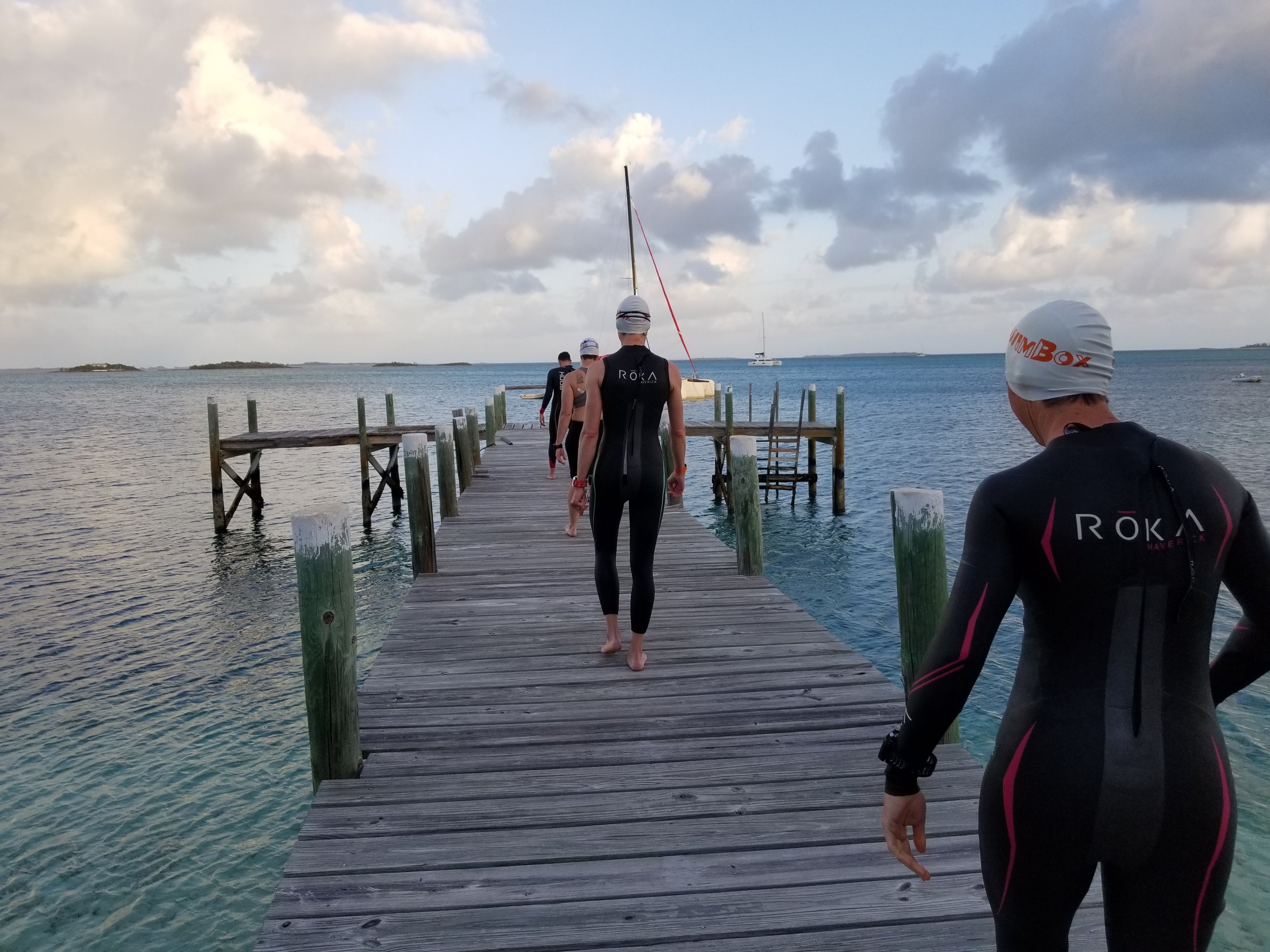
One of everyone's favorite parts of this trip are the morning open water swims, which we do in a gorgeous cove behind our hotel. The cove swims are used to see where everyone is starting at, then work on open water drills and techniques to get them better prepped for their upcoming seasons and work on their problem areas. We set up a course with two of our buoys and do workouts around that course. One day this week we brought our swim parachutes to have them work on adding resistance and bringing some of the drills we do in the pool into the open water. This helps familiarize what we do at SwimBox with the swimming they'll be doing when they compete.

SwimBox Swim Lessons Bahamas Training Trip

After our morning open water swims in the cove we all shower/rinse the salt off (or not shower, I've decided the salt water is my favorite new product for styling my hair) and scarf down as many pancakes and eggs as I can whip up. Once everyone is done with breakfast our down time varied. For instance one day we explored the island on foot, another the swimmers napped while Dominic and I worked, the next we trekked to the nearby Lighthouse to take in the incredible views of our surroundings.

This year we added a well deserved (and much needed) rest day in the middle of the trip. We took a drive out to a place called Little Harbour and had freshly caught seafood and drinks at Pete's Pub and enjoyed not getting in the water in the attempts to break records at how much yardage we could get in. But before we did that we drove into the woods of Marsh Harbour and took in the natural beauty of the Treasure Cay Blue Hole. You have to be lucky to see this, because it's not listed on a map and there are no directions. 

SwimBox Swim Lessons Swim Team Club Team Swimming

All in all we'd call the first week of this trip a success. Everyone had a great time, got some incredible swimming in and a ton of work done, and we got to know this group of our clients that much better. Ohh and I almost forgot. I got this delightful rum cake, which just happened to arrive the afternoon everyone left...oops?

SwimBox Swim Lessons Fairfax Swim Lessons Falls Church Swim Lessons McLean

Dr. Marc Luko Guest Series Post #3: Training Well

In my last two posts we talked about Recovering Well and Moving Well. If you missed
either of those posts make sure that you check them out. For today’s post, we will be
discussing the concept of training well.


A decent amount of you that are reading this probably have a coach. Your job as an athlete is to
show up to practice and complete the workout that day. Simple, right? Well, nothing about
training ever is. Showing up for your training is important, but what are you training for? What is
the goal? If you don't have a goal for your training, i.e. drop 3 seconds in the 400 IM,
then you're just guessing, and when it comes to reaching peak performance, are you willing to
guess?

    SwimBox Swim Lessons Swim Team

    Every good training plan starts with a goal. As world renowned strength coach, Dan John, likes
    to reiterate, “The goal is to keep the goal the goal." So when devising a training plan, you have
    to ask yourself what your goal is for a specific training cycle and reverse engineer it from the end
    result. In our example of the 400 IM, what would you need to swim 3 seconds faster? Here are
    some examples:

    • Speed workouts
    • Speed Endurance workouts
    • Strength Training
    • Skill/Technique training
    • Turn Work
    • Race-Pace Workouts (at a pace 10 sec faster than current race pace)
    SwimBox NCAP Potomac Marlins Fish Swim Lessons

    Now, when you look at your training, what do you see? If the goal is to swim 3 seconds faster
    in the 400 IM but your workouts consist of long, slow, swimming, then it's no surprise that you
    have not gone faster. This leads to the next important concept of training well: auditing.
    No one wants to find out after six months of training that their training was not up to par. While
    you cannot know if your training is effective after one week, it's important to schedule training
    audits to make sure that you're “keeping the goal the goal,” but also that what you're doing
    in training is having a positive affect on your performance. Part of the auditing process is
    performance testing. While the best test is a race, you can't always race every 4-6 weeks. In
    this case, testing and measuring the different abilities that lead to peak performance in your
    sport is important. Examples include:

    • Reaction time
    • Power: medicine ball throws, jumps, Olympic lifts, etc.
    • 50-meter test
    • Video analysis for technique
    • Lactate Threshold Testing
    • Heart Rate Variability

    These are just some examples of metrics that you can test every so often (4-8 weeks) to make
    sure that the training you are doing translates to the results you are looking for. As the saying
    goes, “what gets monitored, gets managed." If you aren't setting goals, developing a training
    plan that supports these goals, and monitoring to make sure that you're on target, this may be
    why you are not seeing the results you had hoped for. Log every workout to make sure that there is a track record. That way, you know what worked
    and what did not. Even if you are not the one making the training plan, it's very important that
    you still log your workouts in some fashion. This allows you, the coach, the strength coach, and
    the clinician to have an understanding of what may have been the cause behind poor
    performance.

    Training hard is important, but training smart is crucial.

    Valentine's Day Gift Guide for Swimmers

    It's that time of year again, everyone's favorite Hallmark driven holiday is almost upon us and I, for one, cannot wait to celebrate with an over-priced box of chocolates and sweatpants (hint hint husband). Candies aside, there are a lot of people who prefer actual gifts on Valentine's Day, so I wanted to throw some ideas at you guys that are specifically for swimmers, as well as the staples I've used to get to and from the pool pretty much my entire life. Get ready, there's a pink and red theme ahead...

    SwimBox Swim Lessons SwimBox Thoughts


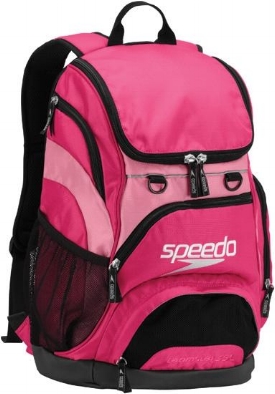
    One thing I always coveted were the backpacks all of my older swimmer friends had when I was little. They have side pockets for caps, goggles, and shampoo, as well as a mesh compartment to put your wet suit in after getting out of the water. There's enough space in the main compartment for shoes and the clothes you want to wear afterwards as well as a towel and any hair dryer/straightener you might need. 
    The one I use to this day is the Speedo Large Teamster Backpack. It's also great as a carry-on bag for short trips that fits easily in the overhead compartment of airplanes.

    SwimBox Swim Lessons Fairfax SwimBox Thoughts


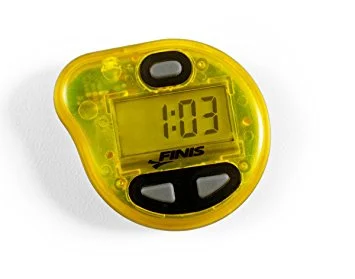
    This one might seem a bit odd, but I promise you'll be finding uses for it for years to come. I've had mine since I was a freshman in high school and I've never had any issues with it. What I'm talking about is the Finis Tempo Trainer. This tiny little tool sits inside your cap and gives you something to pace yourself off of. Think of it as a cute little metronome (any orchestra buffs out there? Fun fact: I played the violin for 9 years and my metronome became one of my closest friends when I first started). If you don't know what a metronome is it's something that helps you keep a beat. You can set it to whatever interval you like and it will make an audible beep for you to follow along to. The Tempo Trainer is a great tool to help you work on your pace, rotation, kick, timing of your breath, etc. It's a bit pricey for what it does but it's a great product that lasts for years. And no, sadly, it doesn't come in pink.

    Back to the pink theme! My next pick is something I actually stole from my diver friends when I was swimming for my summer team as a kid. The Speedo Sports Towel is 12.5 by 16.5 inches and is the most absorbent thing I've ever come across. It's incredibly light and dries quickly as well. This towel is perfect to have at meets, open water events, and triathlons that won't take up too much room in your bag but will get you drier than any beach towel ever could.

    SwimBox Swim Lessons Fairfax Vienna
    SwimBox Swimming Swim Lessons

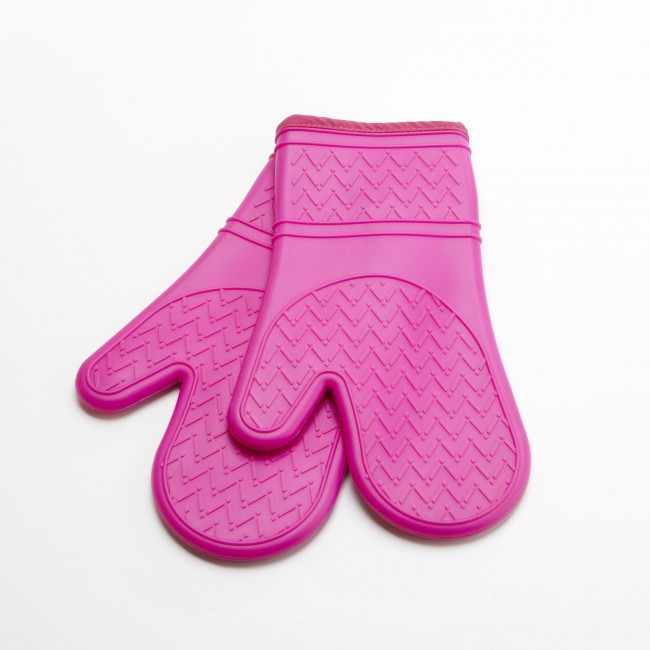
    Now before you say it I already know what you're thinking, why in the world is a silicone oven mitt listed in a swimmers gift guide? The answer is that this thing saved my life growing up when it came to getting ready for school after swimming every morning. This one's pretty specific and I'm sure isn't for everyone, but a Silicone Oven Mitt was the one thing that kept my hair straightener from burning a hole straight through my bag. I know, like I said, this isn't for everyone. But it was my mom's idea when I was in high school and I still use it to this day. It's also perfect for hair driers!

    SwimBox Swim Team Swim Lessons NCAP Clark Potomac Marlins

    Last on the list is simple but something every swimmer should have at least one of, if not 2-3. The Speedo Goggle Case is exactly what it says it is, a goggle case. I had a lot of different variations of this one over the years but this is the best one I've found. It's cheap and easy to use and won't take up too much space in your bag. I used to think these were just silly and unnecessary, but now that I'm an adult and buy my own goggles I use this every time I swim because it keeps them from getting all of those teensy, tiny, scratches all over the lenses, which means it keeps me from buying goggles every 3 weeks because I can't see out of them anymore. Think you don't need this because you're a triathlete and don't swim as much as you bike and run? Think again, because this case will save your goggles from getting damaged in your bag where they're hanging out with all of your other belongings and keep them pristine for race day.

    Dr. Marc Luko Guest Series Post #2: Moving Well

    In my last post I talked about the importance of recovering well. If you have not read that post yet, you can check it out, here. Today I want to address the second secret to elite performance: the importance of moving well.

    Moving well is all about efficiency. Whether you're a runner, swimmer, soccer player, or a gymnast, the better you move, the more efficient you are. In sports where the objective is to be the fastest, this can mean the difference between finishing in 1st place or 3rd place. So, what does moving well look like?

    SwimBox Swim Lessons SwimBox Elite
    SwimBox Swim Lessons Performance Monitoring

    Look at these two athletes. Which one do you think “moves well”? If you said the one on the left, you would be correct. But can you tell me why the athlete on the right does not? We can all guess, but one frame does not tell you about the whole movie.

    SwimBox Swim Lessons Fairfax Virginia Falls Church

    This leads to my next point. Moving well can be broken down into two parts: the mobility that we have and the mobility that we can use.

    The mobility that we have is called range of motion. Range of motion is a measure of how much movement is possible at each joint, e.g. knee, shoulder, elbow, etc. For a visual, think about how much motion a swimmer is going to have at their shoulder vs. someone with arthritis. This can be limited because of injury, surgery, short muscle length (e.g. hip flexors) or a slew of other factors. If someone has an issue with range of motion, they can work to improve theirs. This is where stretching, manual therapy, manipulations, dry needling, etc. are appropriate. But, what happens when there is plenty of range of motion but the athlete is still limited? This is an issue of the mobility we can use.

    The mobility that we can use is a concept that is not so obvious. Do you remember when you were a kid and your parents would tell you not to use a calculator for simple math because you would lose that skill? They would say “if you don’t use it, you lose it”. As hard as it may be to hear, they were right, and that concept doesn’t just apply to math, it also applies to movement. Just because someone has a lot of range of motion does not mean they have the ability to use it, or, more importantly, control all of it. If you have the available shoulder range of the person in Figure 3a (180 deg) but you only use the amount of the person in Figure 3b (90 deg), you will lose the ability to control the shoulder at the upper ranges. This scenario tends to lead to injury because you are taking your body to a place it rarely goes and it's not comfortable with. Think of it like this, if I'm a runner and I have the genetic capability to run 30 miles, but I usually only run 15 miles. What do you think is going to happen when all of a sudden, I attempt to run 25 miles? Here's a hint: nothing good.

    Figure 3a.

    Figure 3a.

    Figure 3b.

    Figure 3b.

    So how do you move well? By practicing good form with exercises and going through full ranges of motion. This will help you reinforce good movement and gain control through all ranges of motion. Never push through ranges that are not available to you. Your body will naturally give you more motion when it feels you are able to control it. While stretching can help, particularly after surgery when joints are stiff, strength training through full range of motion will give you more bang for your buck in the long run. Strength training in this way will help you improve the mobility that you have and the mobility you can use, while at the same time making your stronger in these movements. Once you have done that, follow the words of well-known Physical Therapist, Gray Cook, “Move well. Move often”.  And your parents, "If you don’t use it, you will lose it."

    Not sure if you move well? Get screened by a Physical Therapist and have them give you tips on how to improve where you are at.